Liquidation Hunter — Hyperliquid
Monitors open interest and margin levels to anticipate liquidations, then positions to capture the liquidation move with tight latency.
Priced for your scope. A short description is enough to start.
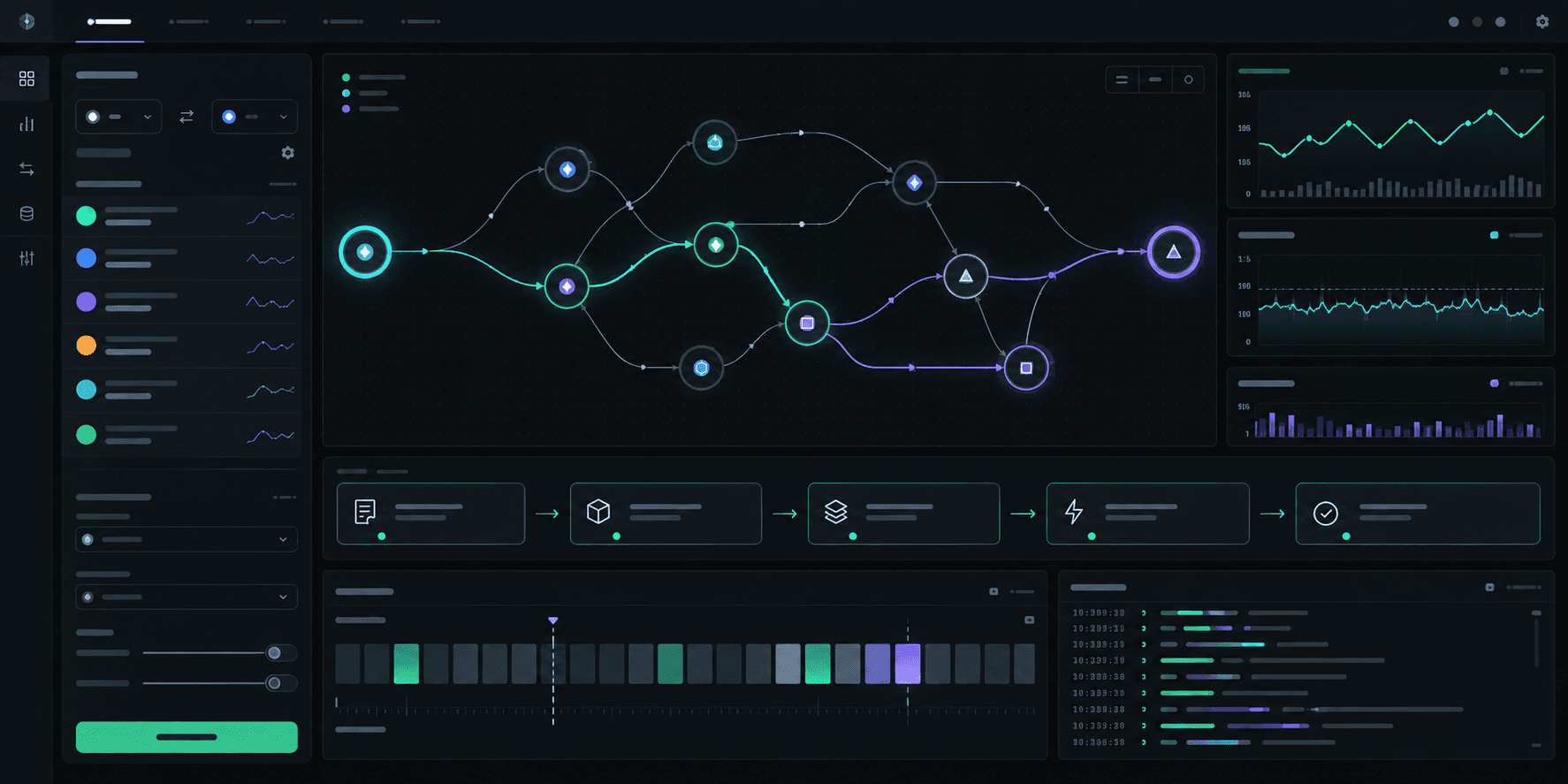
What's included
- Real-time position / margin monitoring
- Liquidation-trigger modeling
- Latency-optimized execution
- Risk caps & logging
Best fit for
- Liquidation capture
- Event-driven perps
- Searcher strategies
Technical scope
What we design and verify
A production liquidation hunter — hyperliquid is more than a working demo. Each major component below is scoped around the target network or platform, expected load, failure conditions and the way your team will operate it after handover.
Real-time position / margin monitoring
The data path is designed for reconnects, duplicate events and observable lag. We document provider assumptions and test recovery instead of treating a live connection as automatically reliable.
Liquidation-trigger modeling
This part of Liquidation Hunter — Hyperliquid is specified as a separate, testable component with acceptance criteria, logging and documented configuration rather than hidden hard-coded behavior.
Latency-optimized execution
Submission and execution logic includes simulation, configurable limits, explicit failure states and structured logs. Production credentials and signing authority remain separated from application logic.
Risk caps & logging
Controls are enforced in code before an action is submitted. Thresholds remain configurable, while rejected actions and triggered safeguards are recorded for later review.
Definition of done
Before delivery, we validate the agreed happy path, expected failures and operational controls. You receive the applicable source code, configuration reference, deployment instructions and a walkthrough of the system. Any third-party fees, infrastructure subscriptions or external dependencies are identified during scoping.
Delivery
How the engagement works
Technical discovery
We confirm the objective, constraints, integrations and acceptance criteria.
Architecture & scope
You receive milestones, responsibilities, timeline and the final quote.
Build & verification
Implementation is tested against the agreed scenarios with visible progress.
Handover & support
We deploy or hand over the code, documentation and operating instructions.
Built for production
Scope, security and ownership
Delivery model
Exchange connectivity, market-data flow and execution logic are separated so each layer can be tested independently.
Security baseline
API permissions, rate limits, order validation and emergency controls are part of the implementation plan.
What we need from you
Markets, execution rules, account model, risk limits and available API or infrastructure access.
Questions before you start
How is Liquidation Hunter — Hyperliquid priced?+
We quote each project after discussing the required features, integrations and deployment. Send a short description; a finished specification is not required. We agree the scope, milestones and price before work begins.
How long does delivery take?+
Timing depends on integrations, testing depth and whether existing code is involved. After a short technical discovery, we provide milestones and a delivery estimate before payment.
Who controls the source code, infrastructure and keys?+
The agreed source code and deployment are handed over to the client. Production wallets, seed phrases and private keys remain client-controlled; we design integrations around scoped credentials and least-privilege access.
How do we verify the result?+
We agree measurable acceptance criteria before implementation, then provide testing evidence, documentation and a handover walkthrough for the delivered scope.
Can you work with our existing code or infrastructure?+
Yes. We can begin with a focused review, identify reusable components and propose the smallest safe implementation path instead of forcing a full rebuild.
Technical resources
Related guides
Building a Hyperliquid Liquidation Bot on the Clearinghouse
A hyperliquid liquidation bot watches margin ratios over websocket, front-runs forced closes, and captures the spread that would otherwise feed the HLP backstop.
Read guide HyperliquidHow Hyperliquid's Oracle Pricing Triggers Liquidations
How Hyperliquid computes oracle and mark price from validator medians, and how to model liquidation thresholds before a cascade eats your position.
Read guide HyperliquidLiquidation-Hunting Bots on Hyperliquid Perps
How liquidation-hunting bots track open-interest clusters and margin walls on Hyperliquid to position ahead of cascade liquidations and capture outsized edge.
Read guideRelated services
Discuss your project and get an estimate
A few sentences about your idea are enough. We'll clarify the requirements and prepare an individual proposal. No finished specification or payment is needed to enquire.